March 24, 2026 at 12:00 PM UTC

Follow the Money: Defense Contractors Are the Only Winners of the Iran War

What happened
Twenty-four days into Operation Epstein Fury, there is exactly one class of Americans doing well: defense contractor shareholders.
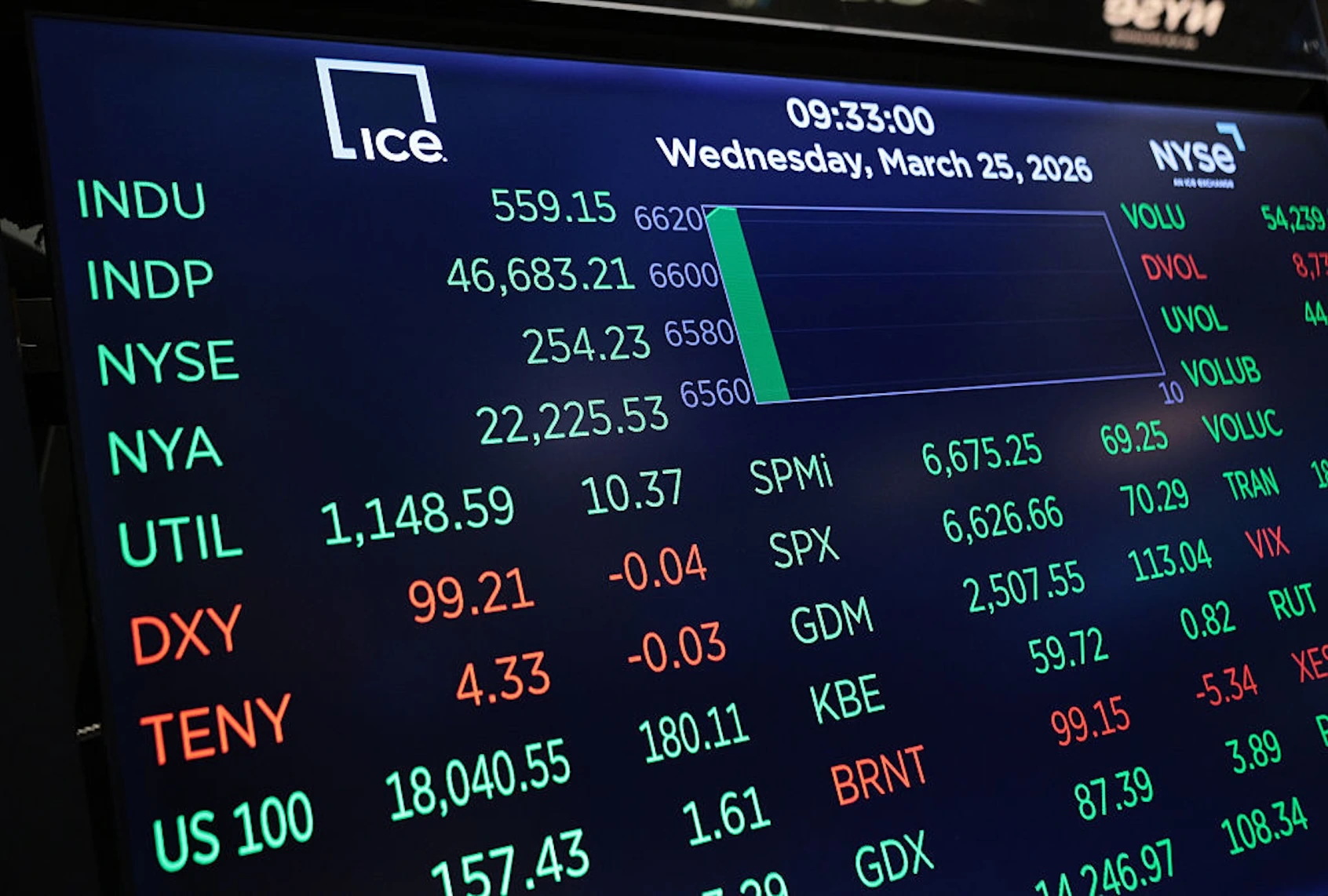
On March 2 — the first trading day after US bombs started falling on Iran — Northrop Grumman closed up 6%, RTX (formerly Raytheon) gained 4.7%, and Lockheed Martin jumped 3.3%. L3Harris rose 3.8%. The combined shareholder wealth gain for the top three contractors on that single day was between $25 billion and $30 billion.
To put that in perspective: the entire annual budget of the Department of Education is $68 billion. Wall Street made half of it in one trading session — because your government started bombing a country that Congress never authorized it to bomb.
The numbers
The war machine isn't just profiting from the strikes. It positioned itself before a single missile flew.
In January 2026 — a full month before the first Tomahawk hit Iranian soil — Lockheed Martin signed a framework agreement with the Pentagon to quadruple THAAD interceptor production from 96 to 400 units per year, at $12.77 million each. Patriot interceptor production is set to increase from 600 to 2,000 per year. Days before the strikes launched, RTX announced expanded production agreements committing to increase Tomahawk cruise missile output to more than 1,000 per year.
The same Tomahawks that cost $3.6 million each — of which 400+ have already been fired into Iran, burning through $1.45 billion on missiles alone.
Since the start of 2026, RTX stock has risen 110% over three years — the largest gain of any major US defense prime. Lockheed Martin is up nearly 40% since January. Northrop Grumman is up 60% over the same window. Fourteen individuals and families with large stakes in defense firms have added more than $28 billion to their personal fortunes in under three months.
Defense Secretary Pete Hegseth summarized the administration's philosophy with characteristic clarity: "It takes money to kill bad guys."
Follow the money — all of it
The Pentagon has asked Congress for a $200 billion supplemental to fund the war. Two hundred billion dollars. For a war that Congress never voted to authorize.
Between 2020 and 2024, private defense companies received $2.4 trillion in Pentagon contracts — 54% of all freely available military spending. During roughly the same period, the top military contractors spent $110 billion on stock buybacks and dividends — more than double what they spent on capital expenditures. Those payouts overwhelmingly benefit the wealthiest shareholders.
The pipeline is elegant in its brutality: taxpayer money flows to the Pentagon, the Pentagon flows it to contractors, contractors flow it to shareholders and executives, and politicians vote against war powers resolutions that would require this whole arrangement to have democratic authorization.
On March 4, defense company executives met at the White House to discuss replenishing stockpiles depleted by the Iran strikes. The companies that build the bombs sat down with the government that drops the bombs to discuss buying more bombs — with your money. No one from Congress was in the room. No one from Minab was in the room.
Lockheed Martin has invested more than $7 billion since Trump's first term to expand production capacity — approximately $2 billion dedicated specifically to accelerating munitions production. RTX has invested over $1 billion in securing raw materials ahead of orders. These are not bets on peace.
The other side of the ledger
While defense shareholders added $28 billion to their fortunes:
- 1,500+ Iranian civilians are dead
- 168+ children killed — including 165 girls at the Shajareh Tayyebeh school in Minab, ages 7 to 12
- 13 American service members killed
- 200+ US troops wounded
- Gas prices jumped 68% — from $3.49 to $5.87 per gallon — costing the average American family $1,400 more per year
- Grocery prices spiked 22%, adding $2,000 per year to household food costs
- Fertilizer prices surged 34%, threatening the American harvest
- 16,000+ Iranian homes destroyed
- 31 hospitals hit, 12 now completely non-functional
- 65+ schools bombed
Every dollar of contractor profit was extracted from this suffering — American and Iranian alike. Every stock buyback was funded by a bomb that landed on someone's home, someone's hospital, someone's school.
Even some Republicans are balking. Rep. Lauren Boebert stated she would not vote for war supplementals: "I am tired of the industrial war complex getting all of our hard-earned tax dollars." When Lauren Boebert is the voice of fiscal restraint on military spending, something has gone profoundly wrong.
What $200 billion buys — and what it doesn't
The Pentagon's $200 billion supplemental request could instead:
- End homelessness in America — all of it — per HUD's own estimate ($20 billion)
- Eliminate child hunger in America for a year ($10 billion)
- Give every teacher in America a $10,000 raise ($10 billion)
- Provide healthcare to every uninsured child for a year ($10 billion)
- Fund the entire Department of Education for three years ($68 billion/year)
- Eliminate medical debt for 100 million Americans ($30 billion)
Or it could buy more Tomahawk missiles at $3.6 million each. The Pentagon and its contractors have made their preference clear. Congress never got to make theirs.
What this means
The US defense industry spent decades building a system where war is the most profitable possible outcome. Production contracts are signed before the bombs drop. Stock prices surge the morning after. Supplemental budgets flow through Congress on an emergency basis — bypassing normal appropriations scrutiny. And the authorization question — whether any of this is even legal — gets buried under the urgency of "supporting the troops."
This war has no congressional authorization. It has no defined objectives. It has no exit strategy. But it has a $200 billion price tag, and every dollar of it flows to companies whose stock prices depend on the war continuing.
The only people winning this war have never been to Iran. They've never been to Minab. They've never smelled burning oil over Tehran. They sit in boardrooms in Bethesda and Waltham and Falls Church, and they are making more money than they have ever made in their lives.
The rest of us — American and Iranian alike — are paying for it.
Related

If this matters, share it. The algorithm buries what it can't monetize.
Share on X
One post can reach thousands. Make it count.
Follow for updates