
April 8, 2026 at 12:00 PM UTC
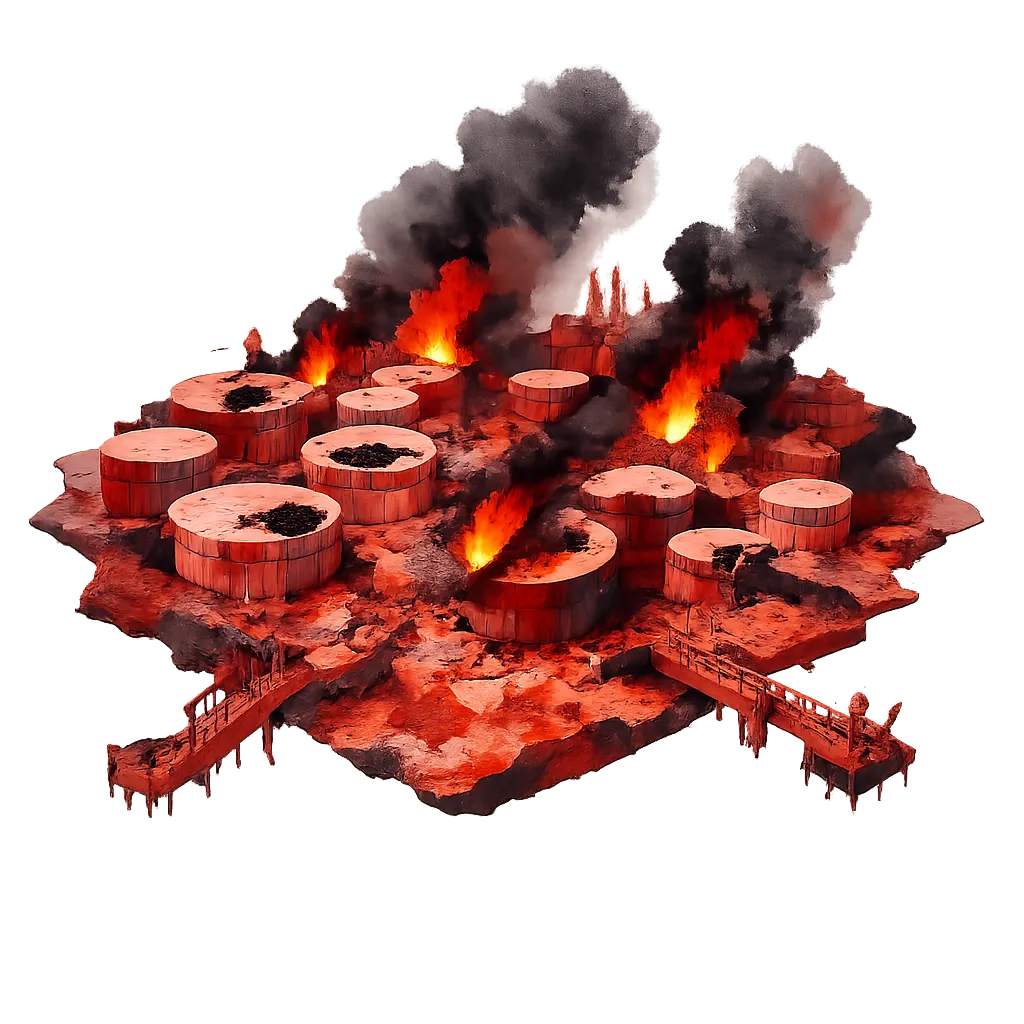
Forty days, one ceasefire, no victor — a strategic ledger of the Iran war
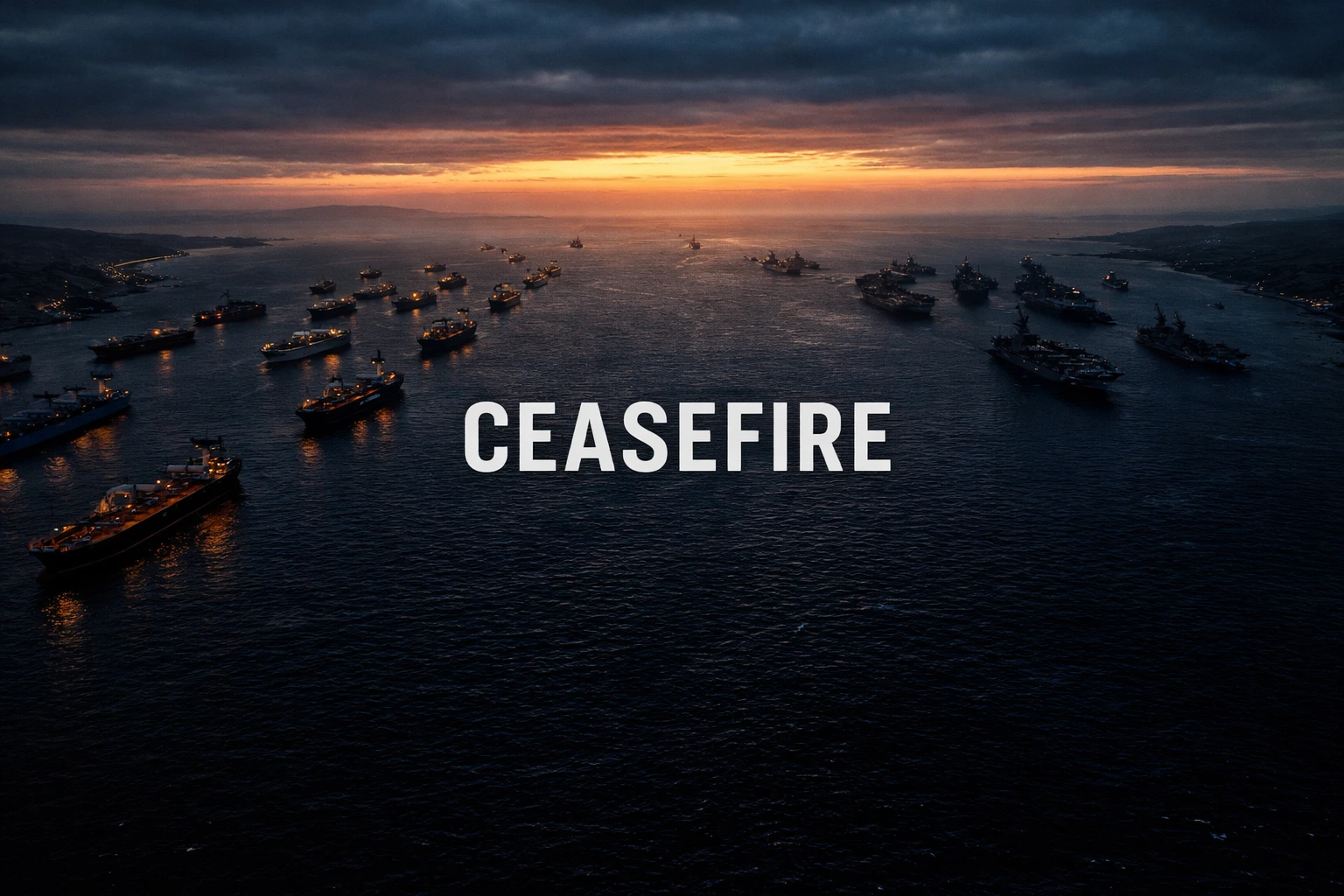
The Clausewitzian question
Forty days after the United States and Israel launched Operation Epstein Fury — assassinating Supreme Leader Ali Khamenei, cratering highways, and raining precision munitions across Iranian airspace — the guns have gone quiet. A Pakistani-brokered ceasefire, accepted one hour before Trump's own deadline to "blow up everything," has paused the most consequential military confrontation since the 2003 invasion of Iraq.
The immediate instinct is to ask: who won?
The honest answer, stripped of both Washington's victory laps and Tehran's martyrdom rhetoric, is more instructive — and more uncomfortable for the side that spent $22-45 billion in 40 days.
Clausewitz wrote that war is the continuation of politics by other means. Victory is not measured in sorties flown or bunkers penetrated. It is measured by whether the political objectives that justified the war were achieved. By that standard — the only one that matters — this ceasefire tells a damning story.
What the US and Israel expected
When the first cruise missiles struck on February 28, 2026, the stated objectives — which shifted repeatedly over the following weeks — amounted to a maximalist wish list:
- Eradicate Iran's nuclear program. Defense Secretary Pete Hegseth declared Iran's nuclear ambitions had been "obliterated."
- Decapitate Iranian leadership. Khamenei was killed in the opening salvo. Mission accomplished — or so it seemed.
- Destroy the Axis of Resistance. Sever Iran's proxy networks in Lebanon, Iraq, Syria, and Yemen.
- Ensure free passage through the Strait of Hormuz. The US Navy would guarantee uninterrupted global oil flows.
- Force unconditional capitulation. Trump threatened to destroy "all of Iran's power plants, bridges, and Kharg Island itself" if demands were not met.
The combined air and naval power of the United States and Israel — the most technologically advanced military forces on the planet — should have made this a textbook coercive campaign. Shock, awe, capitulation. The playbook had worked before, at least on paper.
What actually happened
Iran did not capitulate. It absorbed the decapitation strike, installed a new Supreme Leader (Mojtaba Khamenei) within days, and executed a strategy that turned the conflict from a military contest the US would inevitably win into an economic crisis the US could not afford to sustain.
The instrument was the Strait of Hormuz — the 21-mile chokepoint through which 20% of global oil flows. Iran closed it on March 2 with drone boats, naval mines, GNSS jamming, and direct strikes on commercial vessels. Within a week, Brent crude surpassed $100/barrel for the first time in four years. By March 19, Dubai crude hit a record $166/barrel. The International Energy Agency called it the "largest supply disruption in the history of the global oil market."
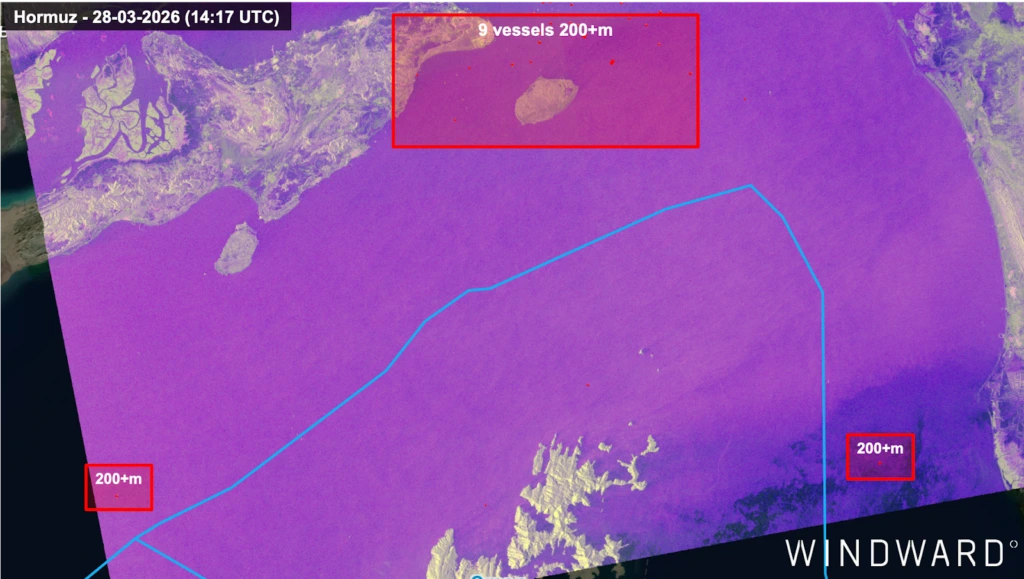
The fallout was immediate and brutal. Gulf Cooperation Council states — nominally US allies — faced a grocery supply emergency: 70% of food imports disrupted, consumer prices spiking 40-120%, 15,000 cruise ship passengers stranded mid-voyage. Iraq's oil production dropped 70%. QatarEnergy declared force majeure on LNG exports. European natural gas benchmarks nearly doubled.
The US Navy, for all its carrier strike groups, could not reopen the strait. A coalition of 19+ nations committed warships. India deployed Operation Urja Suraksha. France launched Operation Aspides. None of it mattered. You cannot sweep mines, suppress shore batteries, neutralize drone swarms, and guarantee safe commercial passage simultaneously in a 21-mile channel against an adversary that has spent decades preparing for exactly this fight.
Trump issued four successive ultimatums (March 22, March 30, April 4, April 7). Each one expired. Iran offered transit — but on its own terms: passage coordinated with Iranian armed forces, tolls assessed in Chinese yuan by the IRGC, selective approvals granted to China, Russia, India, Turkey, Pakistan, and Malaysia. One ship reportedly paid $2 million for the privilege.
On April 8 — day 40 — Trump accepted the Pakistani-brokered ceasefire. Iran agreed to reopen the Strait for 14 days. In exchange, Trump suspended his threat to annihilate Iranian civilization and acknowledged Iran's 10-point plan as a "workable basis" for negotiation.
That plan demands: sanctions lifting, acceptance of Iran's nuclear enrichment, US military withdrawal from regional bases, release of frozen assets, war reparations funded through Hormuz transit tolls, and binding UN Security Council ratification. Trump called it "not good enough." Then sat down to negotiate anyway.
The cost to Iran
None of this should be mistaken for an Iranian triumph. Resilience is not invulnerability.
Iran's Health Ministry reports 2,076 killed and 26,500 injured — figures that independent monitors believe undercount the true toll by a wide margin. Other estimates range from 3,636 (HRANA) to over 7,300 (Hengaw), including thousands of civilians. The infrastructure damage is severe: highways, railway bridges, petrochemical facilities, military installations — five weeks of precision strikes leave scars that take years to rebuild. Iran's conventional military took heavy losses. The US and Israel claim 190+ ballistic missile launchers and 150 naval vessels destroyed.
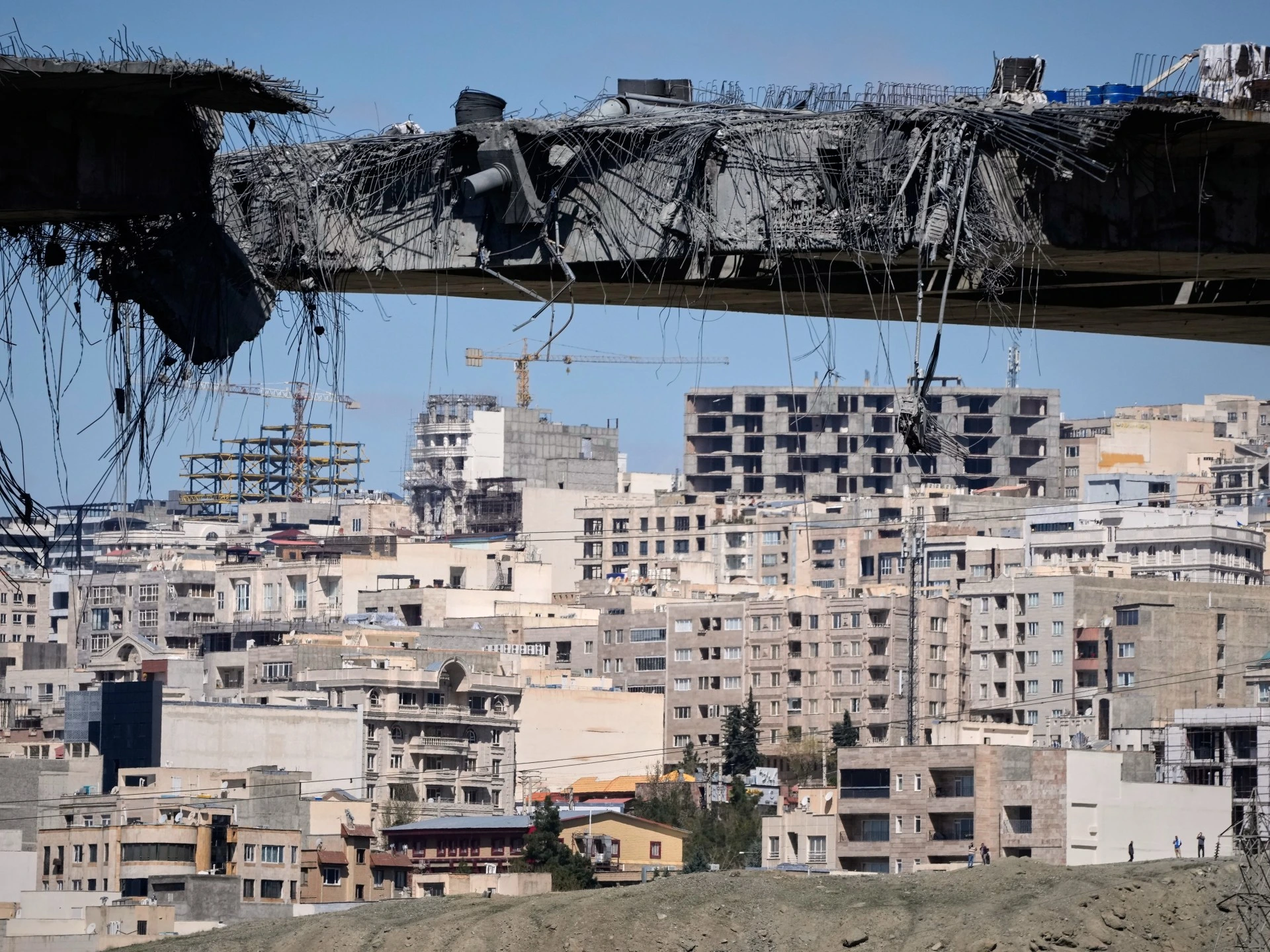
The economy, already strangled by decades of sanctions, has contracted an estimated 10%. Food inflation hit 105%; bread and cereal prices surged 140% year-over-year. The reconstruction bill will run into the billions — and Iran plans to fund part of it by charging ships to transit its own waterway.
This is what "winning" looks like when a country of 88 million absorbs 40 days of bombardment by the world's most expensive military machine. Survival purchased at an unconscionable price.
The historical anomaly
And yet — for all the devastation — what did not happen may matter more than what did.
Iran has been conquered before. Alexander of Macedon burned Persepolis and imposed Greek rule for decades. The Mongol invasions killed millions and installed the Ilkhanate. The Qajar-era wars with Russia cost Iran 40% of its territory and produced treaties that historians still call humiliating. In both World Wars, despite declarations of neutrality, British and Soviet forces occupied the country within days — the army collapsed, the monarch was exiled, hundreds of thousands starved.
Every prior encounter with the dominant military power of its era broke the Iranian state. Territory lost, capitals taken, governments dissolved, populations scattered.
This time: none of it.
The combined military power arrayed against Iran in 2026 dwarfs anything Alexander, the Mongols, the Romanovs, or the British Empire ever brought to bear. The US alone spends more on defense than the next ten nations combined. And in 40 days of bombardment, it could not capture a single border town. Could not seize a small island. Could not open a 30-kilometer strait. Not one provincial governor resigned. Not one commander defected. No mass displacement at any border crossing. National broadcasting ran without a minute of interruption.
Consider the comparison with a recent conflict: when Russia — a military power far below the US in capability — invaded Ukraine in 2022, it occupied territory within hours despite lower bombing intensity. Four years on, with the full backing of the United States and Europe, Ukraine still has not recovered that territory. Millions of its citizens fled abroad.
Iran absorbed a far more intense assault from a far more powerful adversary, hit back across ten countries, maintained state cohesion from border to capital, and on day 40 sat down at a negotiating table as a party dictating terms.
Call that a superpower or call it a nation that refused to break — the strategic fact remains the same. The playbook that worked against Iraq in 2003, against Libya in 2011, and against every other regional power that faced American military dominance this century did not work against Iran. That is not propaganda. It is the data.
The strategic ledger
Here is the comparison that matters — not who dropped more ordnance, but who got what they came for:
| Strategic metric | US/Israel objective | Status at ceasefire | Assessment |
|---|---|---|---|
| Regime change | Decapitate leadership; force regime collapse | Khamenei killed, but successor installed within days. Regime intact. No internal fracturing | Failed |
| Nuclear eradication | "Obliterate" enrichment capability | ~1,000 lbs of highly enriched uranium remains buried in mountain facilities. Iran demands enrichment rights in ceasefire terms | Failed |
| Strait of Hormuz | Guarantee free passage under US naval protection | Iran closed it for 37 days, reopened on its own terms with IRGC-coordinated transit and toll fees | Failed |
| Destroy Axis of Resistance | Sever proxy networks in Lebanon, Iraq, Yemen | Networks fragmented but not destroyed. Hezbollah depleted but operational. Israel excluded Lebanon from ceasefire. Houthis, PMF still active | Incomplete |
| Unconditional capitulation | Force Iran to accept all US demands | Iran presented its own 10-point plan. US accepted it as "workable basis" for talks. Negotiations in Islamabad, not Washington | Failed |
| Deterrence | Demonstrate that attacking Iran carries no meaningful risk | Iran imposed catastrophic economic costs. Future adversaries now have a Hormuz playbook | Backfired |
| Economic stability | Contain conflict's economic fallout | Largest oil supply disruption in history. $126/bbl oil. GCC food crisis. $45B+ US military spend. Pentagon requesting $200B more from Congress | Failed |
| Iranian regime survival | N/A (Iran's core objective) | Regime survived. New Supreme Leader in place. Government functional | Achieved (Iran) |
| Economic leverage via Hormuz | N/A (Iran's core objective) | Shut down 20% of global oil. Forced a US president to back down from four ultimatums | Achieved (Iran) |
| Nuclear preservation | N/A (Iran's core objective) | Enriched uranium stockpile intact. Enrichment rights on the table — not as a concession, but as a demand | Achieved (Iran) |
| International negotiating position | N/A (Iran's core objective) | Talks in neutral Islamabad, not under US terms. Pakistan, China, Russia backing Iran's position | Achieved (Iran) |
| State cohesion under fire | N/A (Iran's core objective) | No territorial loss, no city captured, no government collapse, no commander defection, no mass displacement. First time in its own history that Iran withstood the era's dominant military power without fracturing | Achieved (Iran) |
The deterrence paradox
Before February 28, the assumption behind US Middle East policy was simple: American military power could coerce any regional actor into compliance. The Strait of Hormuz was a theoretical vulnerability — one Iran would never actually exploit, because the punishment would be too severe.
Iran called that bluff. Closed Hormuz. Absorbed the bombardment. Watched oil hit $166/barrel. Waited for the phone to ring.
It rang on day 40 — from Islamabad, with a US delegation ready to talk.
As Trita Parsi told Democracy Now!: "Trump's failed use of force has blunted the credibility of American military threats." The US, he argued, "is no longer in a position to dictate terms."
The deterrence equation has flipped. Before the war, Iran was deterred from closing Hormuz by the threat of US retaliation. After the war, every regional actor knows that closing Hormuz can force the US to the table — and that 40 days of bombardment was not enough to prevent it.
The US proved it could destroy Iranian targets at will. It also proved it could not convert that destruction into political outcomes. The first fact impresses defense contractors. The second reshapes geopolitics.
The five questions that determine the real winner
Strip away the rhetoric. A senior intelligence brief would put five questions on the table:
1. Did deterrence increase or decrease?
Iran's deterrence increased. The Hormuz card is real, survivable, effective. US deterrence decreased — four ultimatums, four backdowns. Future adversaries are watching.
2. Were core political objectives achieved?
US/Israel: No. The regime survived, the nuclear program is intact, the proxies are degraded but operational, and Iran is negotiating from leverage — not supplication. Iran: Partially. Regime survived, enrichment preserved, global attention secured. But the human cost was immense, and long-term recovery is a question without an answer yet.
3. Who is stronger for the next round?
Iran's conventional military is severely degraded — launchers, naval vessels, air defenses all took heavy losses. But the asymmetric capabilities that actually mattered in this war (Hormuz closure, proxy coordination, underground nuclear facilities) remain intact. The US burned through vast munitions stocks and political capital. The Pentagon is asking Congress for $200 billion in supplemental funding. Iran can rebuild missiles in years. American credibility takes longer.
4. How did alliances shift?
The GCC states — Saudi Arabia, UAE, Kuwait, Qatar — found out that hosting US bases made them targets, not partners. Pakistani mediation elevated Islamabad as a regional power broker. China and Russia vetoed the UN Security Council resolution on April 7 and backed Iran's selective Hormuz transit. The US-led regional order is coming apart.
5. What precedent was set?
The most dangerous outcome for Washington: proof that a determined regional power can weaponize geography against a global hegemon and force a negotiated pause. Every country with a chokepoint, a missile program, or a bunker complex just got a masterclass.
The uncomfortable conclusion
Iran did not win this war by conventional methods. It did not defeat the US military in the field, sink its carriers, or shoot its jets out of the sky at scale. By every traditional metric of military performance, the United States and Israel dominated.
But war has its own logic for choosing winners and losers — and it does not care about sortie counts.
Henry Kissinger articulated the rule in 1969, writing about Vietnam in Foreign Affairs: "The conventional army loses if it does not win. The guerrilla wins if he does not lose." Ivan Arreguín-Toft formalized it decades later in How the Weak Win Wars (Cambridge, 2005), demonstrating that weaker powers win asymmetric conflicts at increasing rates when they refuse direct engagement and force the stronger side into a war of political endurance. The logic is simple: the stronger power carries the burden of justification. If it cannot achieve its stated objectives, it has failed — and the weaker power, by surviving, has won by default.
By that framework, the ledger is hard to argue with. The United States launched a war to eradicate Iran's nuclear program, collapse its regime, destroy its proxy networks, and guarantee free passage through the Strait of Hormuz. Forty days and $22-45 billion later, none of that happened — and Washington is now negotiating on terms closer to Iran's 10-point plan than to its own opening demands.
Iran launched no war. It was attacked. Its objective was to survive, preserve its nuclear leverage, and impose enough pain to reach the negotiating table with its bargaining chips intact. On day 40, it is sitting in Islamabad with all of them.
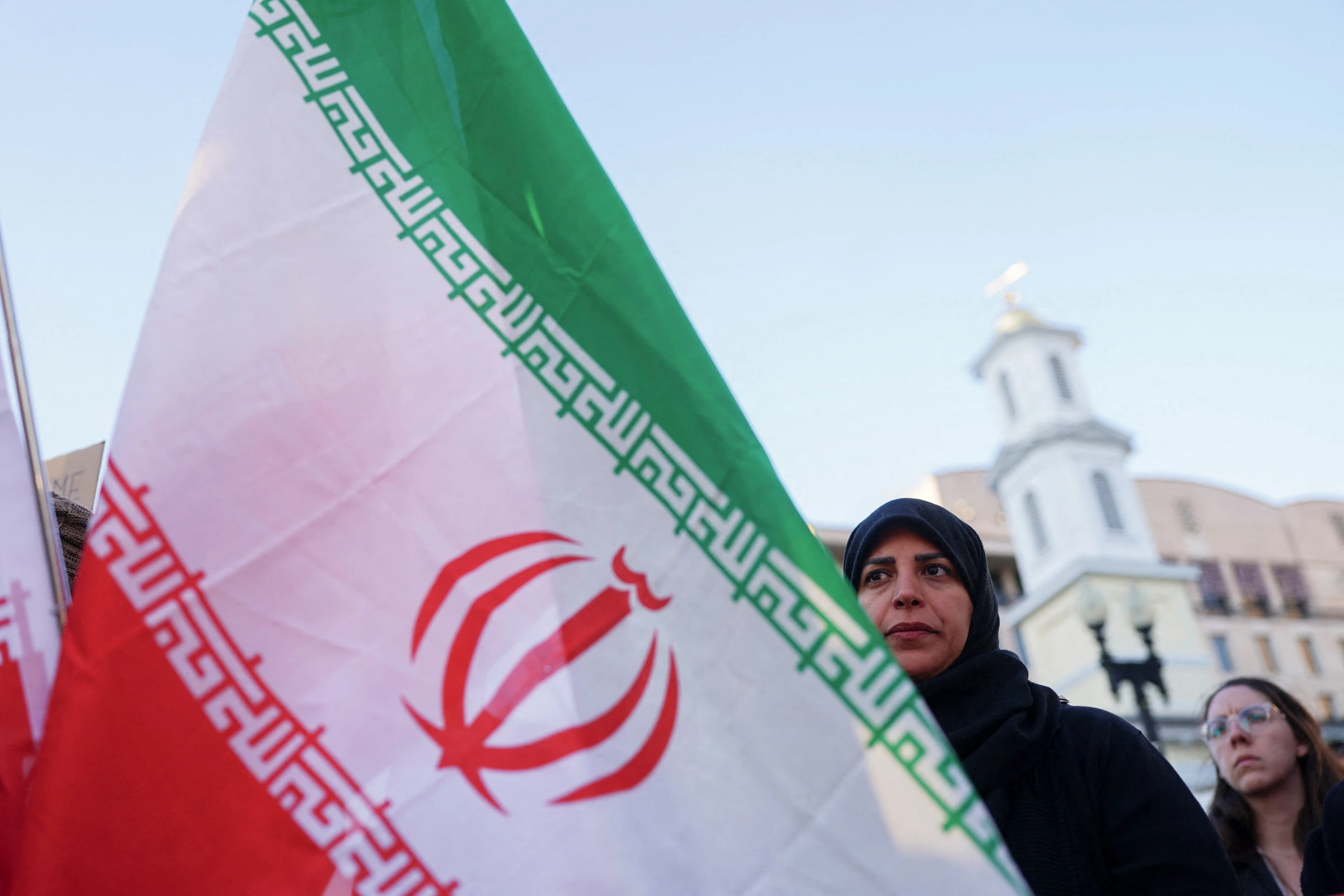
But survival is not safety. The shadow of this war still hangs over Tehran. The ceasefire is 14 days, not permanent. The nuclear question is unresolved. The US has demonstrated both the willingness and the capability to strike deep inside Iranian territory — and it may do so again if talks collapse. Iran's challenge now is to convert a wartime survival into a durable strategic position: to change the calculations so that the next crisis does not begin where this one started.
The Pentagon will call this a tactical success. Kissinger's rule calls it something else.
The 14-day ceasefire window opened April 8, 2026. Talks begin in Islamabad on April 10. Whether this pause becomes a settlement or just an intermission is an open question — one that depends on whether Washington can accept that overwhelming force is no longer the same thing as strategic victory, and whether Tehran can turn 40 days of endurance into a lasting peace.
Related
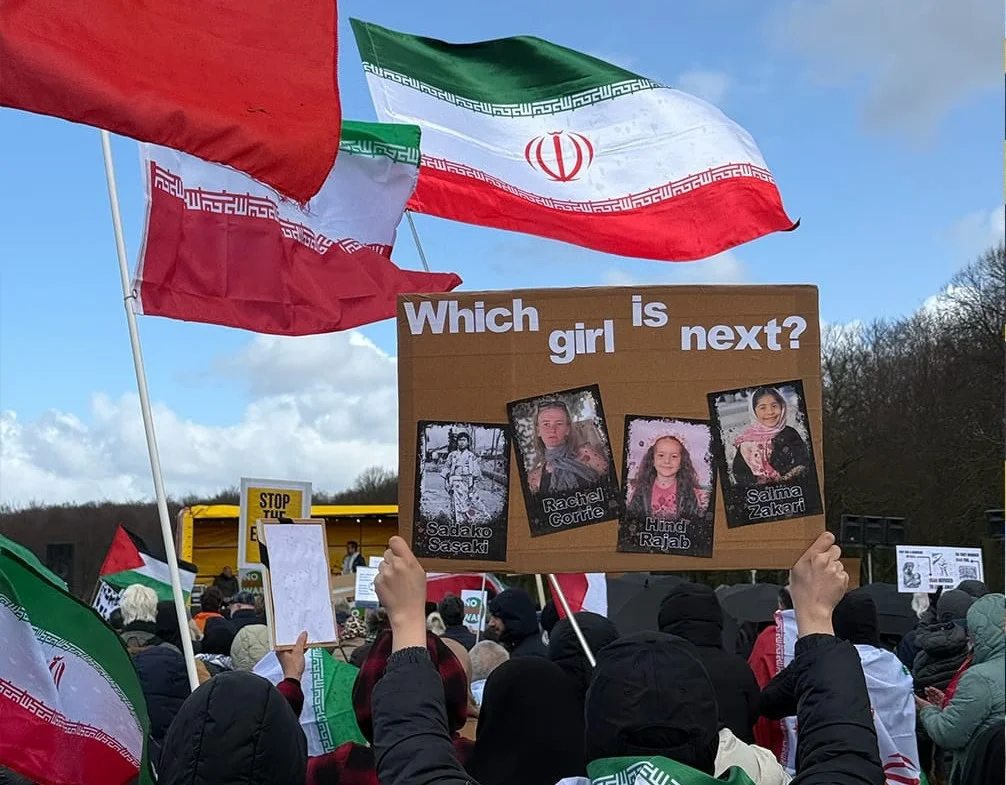
The Hague's anti-war protest dwarfed the MEK and Pahlavi rallies — and no one covered it
The very idea of surrender is foreign to Iran — and Washington doesn't get it
Trump blinks on Iran power plant bluff — claims 'productive conversations' after his own deadline expires unanswered
If this matters, share it. The algorithm buries what it can't monetize.
Share on X
One post can reach thousands. Make it count.
Follow for updates